Diego Cibelli
Eugenio Viola
En El país de Nunca Jamás, la isla imaginaria se convierte en un laboratorio del presente. La ficción permite explorar las categorías que distinguen lo propio de lo ajeno. (…)
Eugenio Viola, curador de la exposición.
Con El país de Nunca Jamás, Diego Cibelli transforma NC arte en una geografía suspendida entre el relato, la experiencia sensorial y la imaginación. Esta exposición inmersiva, concebida para estos espacios, toma su nombre de la isla de Peter Pan, creada por J. M. Barrie: un territorio habitado por niños perdidos y criaturas fantásticas, sustraído a las coordenadas ordinarias del tiempo. El deseo de libertad plantea una pregunta que atraviesa el recorrido: ¿cómo podemos imaginar otros mundos y hacerlos habitables juntos?
Neverland encarna la nostalgia de la infancia, el rechazo a crecer y la posibilidad de eludir las reglas de la realidad. Sin embargo, la promesa de una existencia libre de las restricciones de la vida adulta encierra una ambivalencia. Incluso un paraíso imaginario establece condiciones de acceso, define formas de pertenencia y puede generar exclusiones. Cibelli parte de esta tensión para interrogar la relación entre individuo y colectividad, entre el deseo de construir otro lugar y la responsabilidad hacia quienes lo habitan con nosotros.
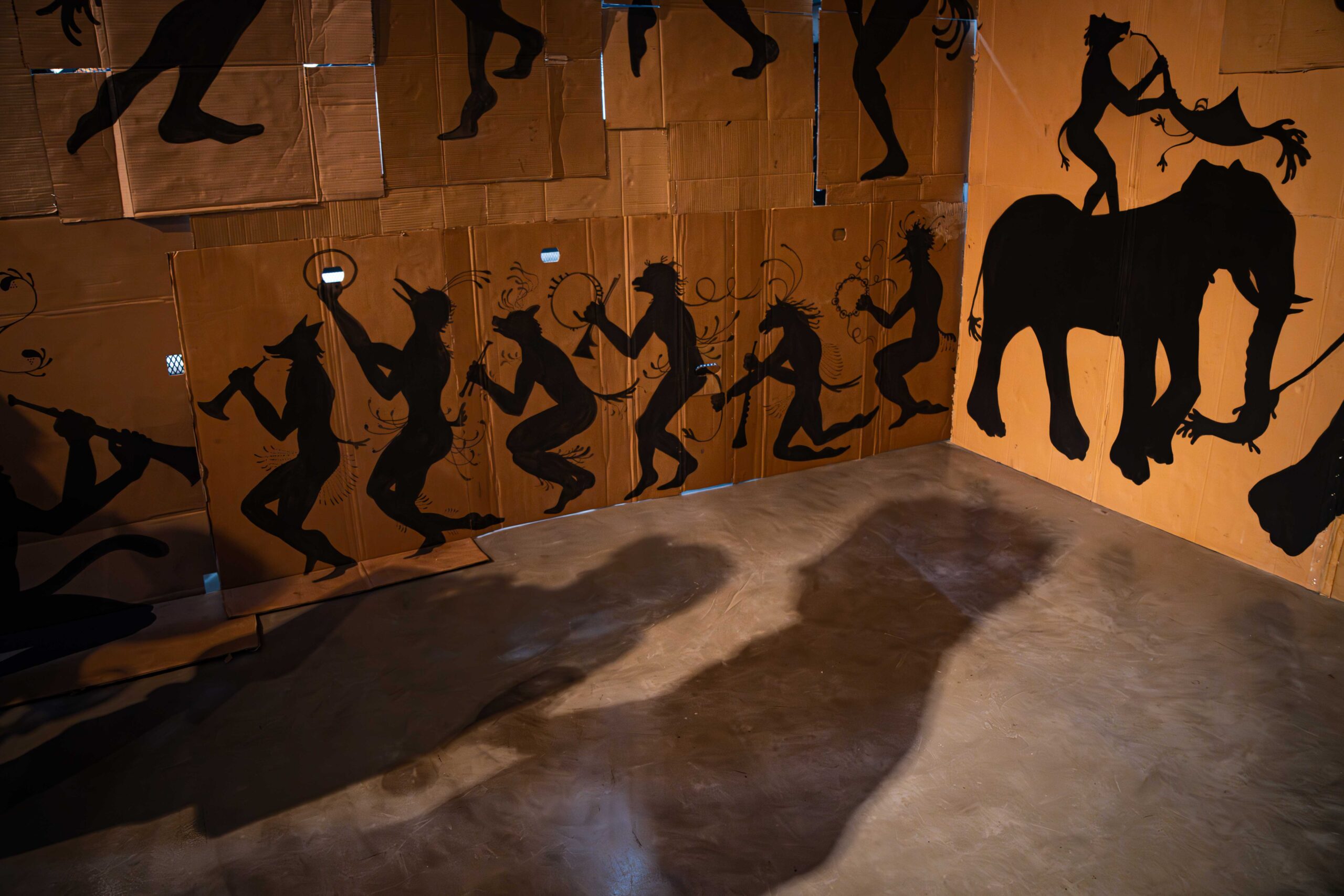
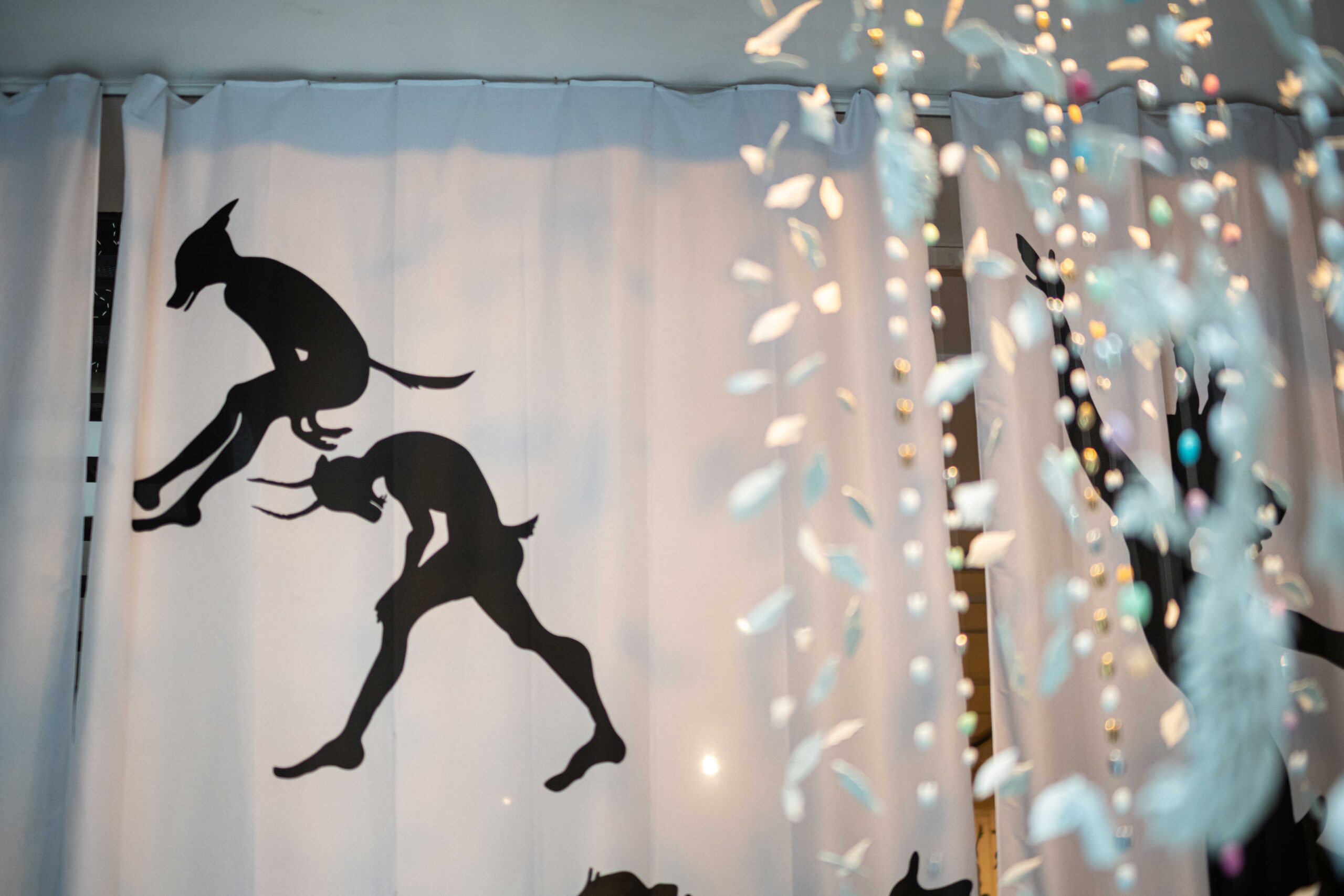
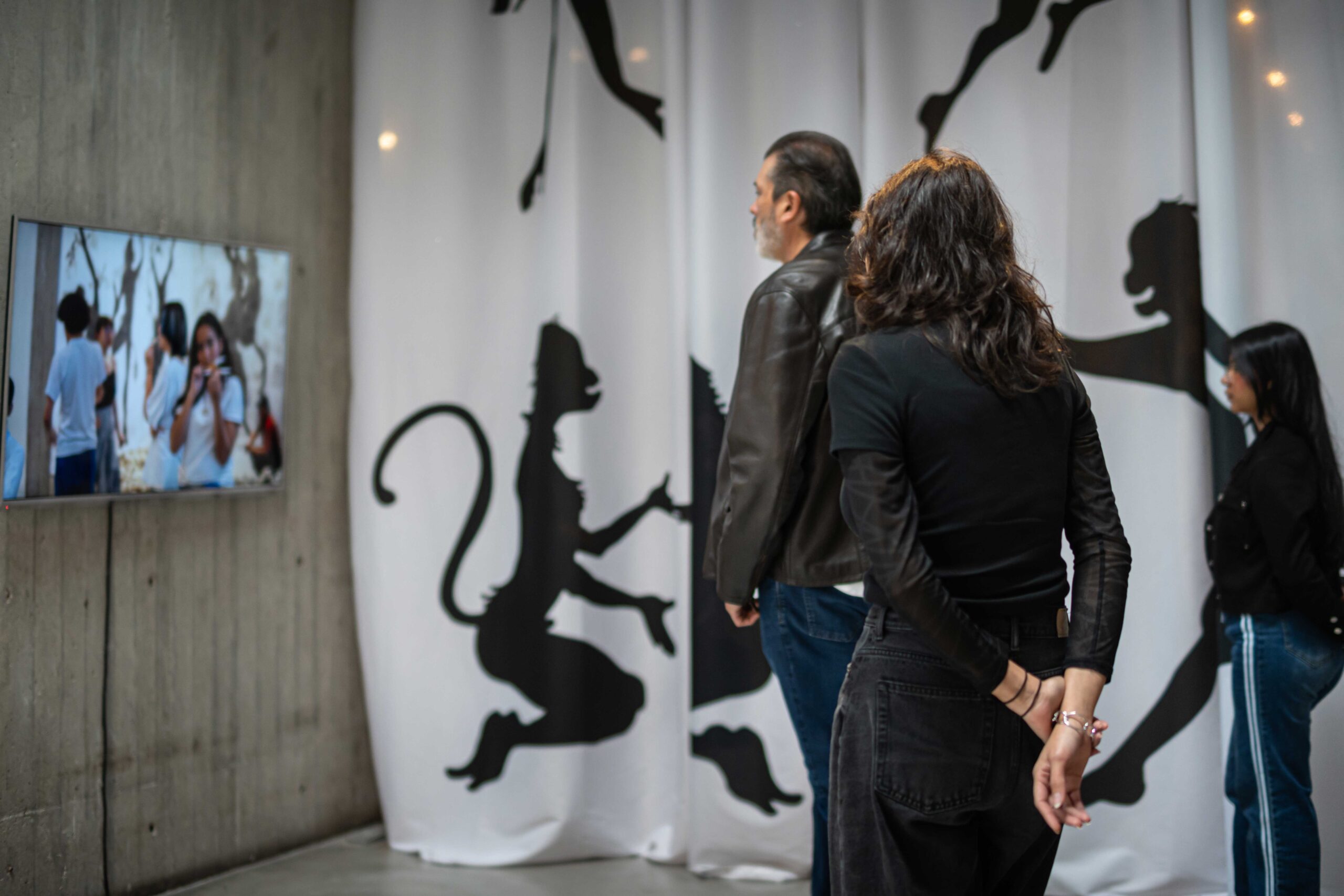
El tránsito comienza en la calle. Figuras y criaturas difíciles de clasificar asoman por las ventanas; transparencias y superposiciones convierten la fachada en un umbral permeable entre la ciudad y el mundo que toma forma dentro. La arquitectura participa en la narración, acompañando al visitante en un recorrido que modifica su percepción del espacio. La entrada prolonga un encuentro iniciado afuera, mientras los límites entre lo familiar y lo extraño se vuelven inciertos.
En el interior, figuras, elementos suspendidos, objetos y materiales efímeros conservan huellas de una acción y evocan gestos de un ritual ya celebrado. La infancia emerge mediante el juego y su capacidad de alterar la percepción del tiempo, cuestionar jerarquías y suspender convenciones. El placer del descubrimiento y la posibilidad de asumir otras formas abren relaciones aún por definir, otorgando a la imaginación un papel activo en la experiencia expositiva.
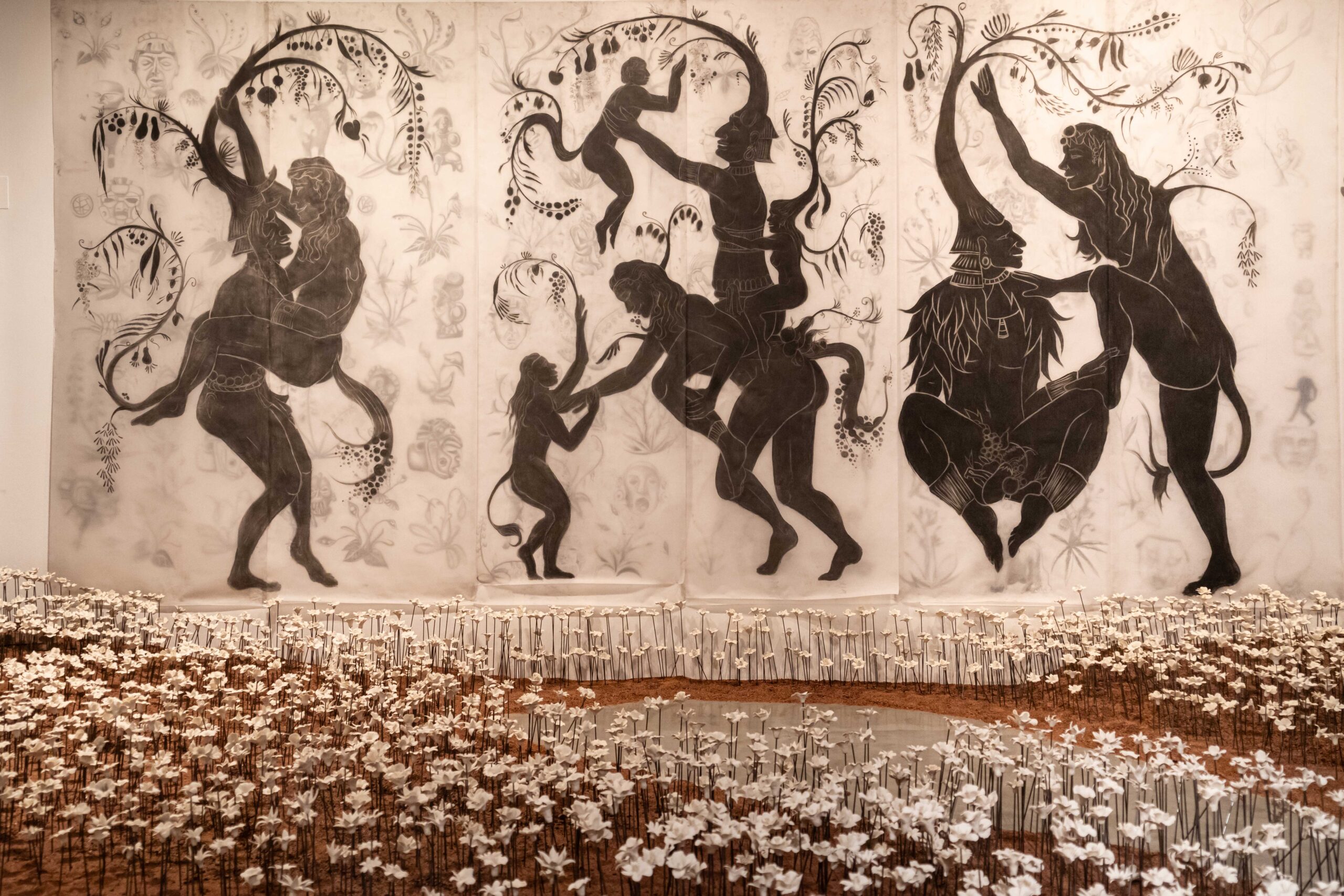
Una monumental isla-jardín configura un paisaje encantado, exuberante y vulnerable. Figuras híbridas y organismos nacidos del injerto entre lo humano, lo animal y lo vegetal componen un ecosistema donde las identidades se redefinen mediante el encuentro y la metamorfosis. Cada cuerpo hace visible una relación entre formas diferentes. Su coexistencia invita a observar las diferencias y dependencias recíprocas que sostienen este entorno, reconociendo en la transformación una posibilidad de existencia compartida.
El imaginario de Cibelli se nutre de las mitologías preclásicas, las arquitecturas efímeras de la fiesta barroca y las cabezas compuestas de Arcimboldo. Injertos, hibridaciones y contaminaciones atraviesan estas referencias y reaparecen en sus criaturas. A estas genealogías se suman otras maneras de concebir lo viviente, que cuestionan la centralidad del ser humano y reconocen su interdependencia con otras formas de vida. Estas perspectivas permiten pensar el cuerpo como un lugar de transformación y el paisaje como un conjunto de relaciones.
La investigación sobre las formas de habitar dialoga también con la geografía humanista, atenta a cómo la experiencia, la memoria y los vínculos afectivos confieren significado a los lugares. La pertenencia se construye mediante las presencias y gestos que atraviesan un espacio. Habitar significa participar en esta trama, reconociendo que un entorno compartido se configura a través de quienes lo recorren y de las relaciones que establecen.
En El país de Nunca Jamás, la isla imaginaria se convierte en un laboratorio del presente. La ficción permite explorar las categorías que distinguen lo propio de lo ajeno. ¿Quién encuentra un lugar en este paraíso? ¿Qué responsabilidades conlleva la libertad individual? El visitante explora estas preguntas mediante su recorrido. El asombro se convierte en una forma de atención a presencias distintas a la nuestra. Imaginar otro mundo significa comenzar a reconsiderar cómo habitamos aquel que ya compartimos.
–Eugenio Viola
With El país de Nunca Jamás, Diego Cibelli transforms NC arte into a geography suspended between storytelling, sensory experience, and imagination. This immersive, site-specific exhibition takes its name from Peter Pan’s island, created by J. M. Barrie: a realm inhabited by lost children and fantastical creatures, removed from the ordinary coordinates of time. The desire for freedom raises a question that runs throughout the exhibition: how can we imagine other worlds and make them places we can inhabit together?
Neverland embodies nostalgia for childhood, the refusal to grow up, and the possibility of escaping reality’s rules. Yet the promise of an existence free from the constraints of adult life is inherently ambivalent. Even an imaginary paradise establishes conditions of access, shapes belonging, and can create exclusion. Cibelli begins with this tension to explore the relationship between individuals and communities, between the desire to create another world and our responsibility toward those who inhabit it with us.
The passage begins in the street. Figures and creatures that resist easy classification appear at the windows; layers of transparency and overlapping forms turn the façade into a permeable threshold between the city and the world taking shape inside. Architecture becomes part of the narrative, accompanying visitors on a journey that changes their perception of space. Entering the building extends an encounter that began outside, as the boundaries between the familiar and the unfamiliar become uncertain.
Inside, figures, suspended elements, objects, and ephemeral materials preserve traces of an action and evoke the gestures of a ritual already performed. Childhood emerges through play and its ability to alter our perception of time, question hierarchies, and suspend conventions. The pleasure of discovery and the possibility of assuming other forms open up relationships yet to be defined, giving imagination an active role in the exhibition experience.
A monumental island-garden creates an enchanted landscape, lush and vulnerable. Hybrid figures and organisms born from the grafting of human, animal, and vegetal forms constitute an ecosystem in which identities are redefined through encounter and metamorphosis. Each body reveals a relationship between different forms. Their coexistence invites us to observe the differences and mutual dependencies that sustain this environment, recognizing transformation as a possibility for shared existence.
Cibelli’s imagery draws on preclassical mythologies, the ephemeral architecture of Baroque festivities, and Arcimboldo’s composite heads. Grafting, hybridization, and the intermingling of forms connect these references and reappear in his creatures. These lineages intersect with other ways of understanding the living world that question human centrality and recognize our interdependence with other forms of life. Together, these perspectives allow us to understand the body as a site of transformation and the landscape as a set of relationships.
The artist’s exploration of ways of dwelling also engages with humanistic geography, which considers how experience, memory, and emotional bonds give meaning to places. A sense of belonging develops through the presences and gestures that move through a space. To dwell is to participate in this web of relationships, recognizing that a shared environment is also shaped by those who pass through it and the relationships they establish there.
In El país de Nunca Jamás, the imaginary island thus becomes a laboratory for the present. Fiction allows us to explore the categories through which we distinguish what we regard as our own from what we perceive as other. Who finds a place in this paradise? What responsibilities does individual freedom entail? Visitors explore these questions as they move through the space. Wonder becomes a form of attention to presences different from our own. To imagine another world is to begin reconsidering how we inhabit the one we already share.
– Eugenio Viola